













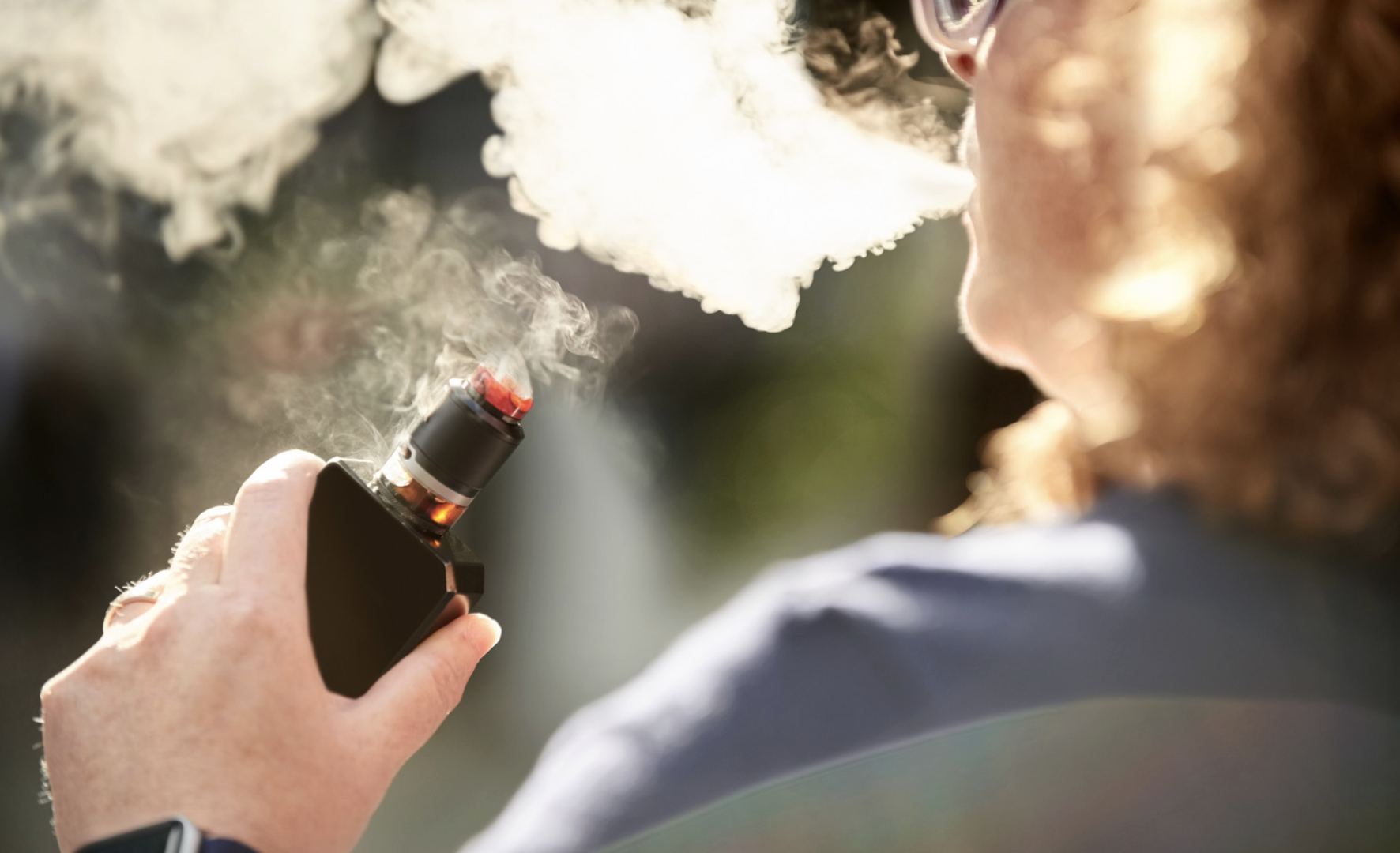
Many people switch from smoking to vaping believing it’s the safer choice – and when it comes to trying for a baby, that instinct is understandable. But a new study published in Human Reproduction raises an important question that hasn’t received nearly enough attention: it may not only be the nicotine in e-cigarettes that matters. The flavourings themselves could pose a risk to the very earliest stages of embryo development.
For anyone trying to conceive, going through IVF, or in the first weeks of pregnancy, it’s research worth understanding.
What the researchers looked at
Scientists at the University of California, Riverside focused on vanillin – the compound behind that familiar vanilla taste. Vanillin is one of the most common flavour chemicals in e-cigarette refill fluids. It’s found in more than half of the products tested, and in some it reaches concentrations dramatically higher than anything used in food or cosmetics.
To study its effect on early development, the team used human embryonic stem cells. These cells are a well-established laboratory model for the epiblast – the small cluster of cells present around weeks two to three of pregnancy, when the embryo is beginning to organise itself and lay down the foundations for every future organ and tissue.
What they found
The results pointed to a two-tier effect, depending on the dose.
At higher concentrations, vanillin was outright toxic to the cells: it slowed their growth, caused them to detach, damaged their internal energy machinery, and triggered cell death.
At much lower concentrations, the effect was subtler but arguably more concerning. Rather than killing the cells, low-dose vanillin nudged them off course. The cells began losing their “blank slate” quality – the property that allows them to become any cell type – and started prematurely specialising down a particular developmental path before they were meant to. In early development, timing and coordination are everything, and this kind of unscheduled change could interfere with the delicate choreography of those first weeks.
The researchers traced both effects to a single mechanism: vanillin switches on a calcium channel called TRPV4 on the surface of the cells. When they blocked that channel, the disruptive effects disappeared – strong evidence that TRPV4 is the route through which vanillin acts.
Why the doses matter
A common and fair response to laboratory studies is: “But are those concentrations anything like what a real person would be exposed to?”
This is where the study becomes especially relevant. The team built an exposure model estimating how much vanillin might actually reach the bloodstream – and by extension the embryo – of someone who vapes. They found that typical vaping patterns could produce blood concentrations right around the low dose that altered cell development in their experiments. In other words, the concerning effects appeared at levels that ordinary use could plausibly reach, not at extreme, unrealistic amounts.
The developmental window in question – roughly weeks two to three – is also a stage when many people don’t yet know they’re pregnant. That makes the “planning ahead” message particularly important for anyone actively trying to conceive.
Keeping this in perspective
It’s important to be balanced here. This was a laboratory study using cells, not a study of pregnancies, and the authors are clear about that. It does not prove that vaping causes miscarriage, birth defects, or harm to a specific pregnancy. What it does is reveal a biological mechanism – a plausible way that a widely used vaping ingredient could interfere with early development – that simply wasn’t understood before.
There’s also a wider regulatory point the authors raise: because manufacturers aren’t required to list flavouring ingredients or concentrations on e-cigarette packaging, someone using a sweet, fruity, or dessert-flavoured product may have no idea they’re inhaling vanillin at all, let alone in what amount.
Notably, this isn’t an isolated finding. The same research group has previously shown that other popular vaping additives – menthol and a synthetic coolant called WS-23 – affect these early cells through related channels. A pattern is emerging that flavouring chemicals, not just nicotine, deserve closer scrutiny when it comes to reproductive health.
What this means for you
If you’re on a fertility journey, here are the practical, non-judgemental takeaways:
- The flavourings aren’t automatically “safe.” Reduced harm compared with cigarettes doesn’t mean no harm – and the specific ingredients matter.
- The earliest weeks count. Because these effects concern a stage that often precedes a positive test, reducing or stopping vaping before conception is the most protective approach for anyone trying to conceive.
- You don’t have to navigate this alone. If you vape and are planning a pregnancy or undergoing treatment, your fertility clinic or GP can offer genuinely helpful, judgement-free support to cut down or quit.
- Emerging science is exactly that – emerging. This is one study adding to a growing picture, not the final word. But it’s a reasonable prompt to have a conversation with your clinical team.
At IVF Couriers, our work is built around protecting reproductive potential at every step of the journey – from the careful, temperature-controlled hand-carry transport of embryos, eggs, and sperm across borders, to sharing the research that helps intended parents make informed choices. Studies like this one are a reminder that the choices made in the weeks and months before an embryo is created can matter just as much as the care taken afterwards.
If you have questions about your own situation, please speak with your fertility specialist. They can give you advice tailored to you.
This article is for general information and is not medical advice. Always consult a qualified healthcare professional about your individual circumstances.
Reference
Etemadi S, Talbot P. Nanomolar vanillin, an e-cigarette flavorant, appears to disrupt pluripotency and promote endodermal differentiation in human embryonic stem cells via TRPV4 activation. Human Reproduction, 2026; deag126. Open access (CC BY). https://doi.org/10.1093/humrep/deag126
Read the full study here: https://academic.oup.com/humrep/advance-article/doi/10.1093/humrep/deag126/8758908